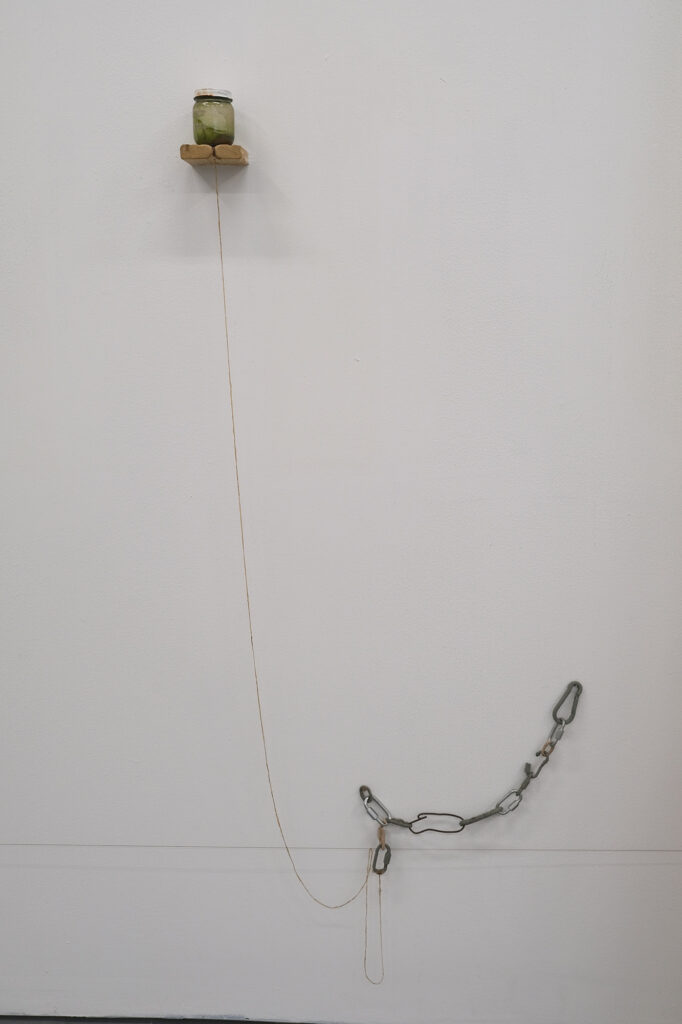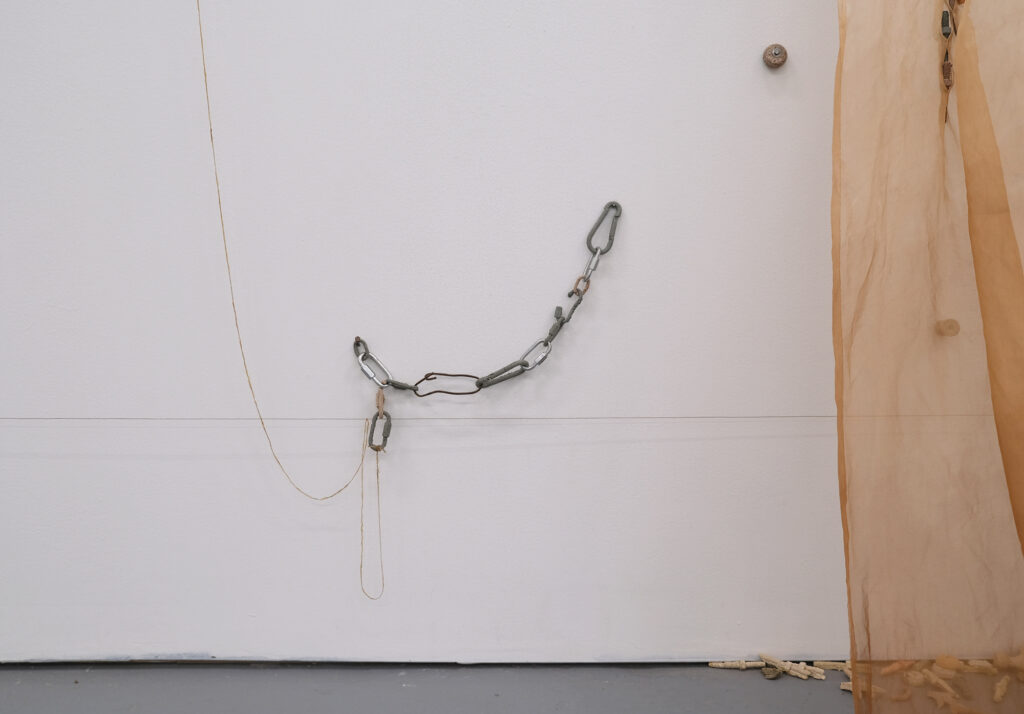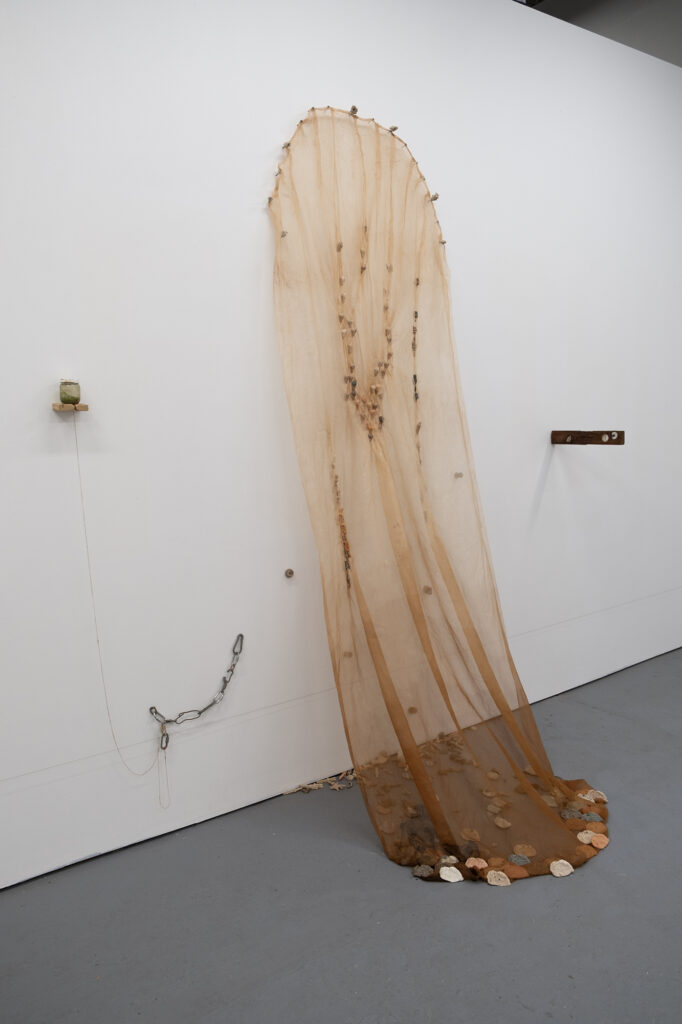
is it still a river when the water is gone? was presented at Big Ramp (Philadelphia, PA), September – October 2025 (text by J. Chris Hammes)
This summer the Rio Grande river ran dry, exposing the clay riverbed for the first time in 40 years. The absence of water has sparked legislative battles as to what constitutes a river. What is worth protecting when an ecosystem is depleted? Where have human tools of language and categorization failed to measure our impact on the natural world?
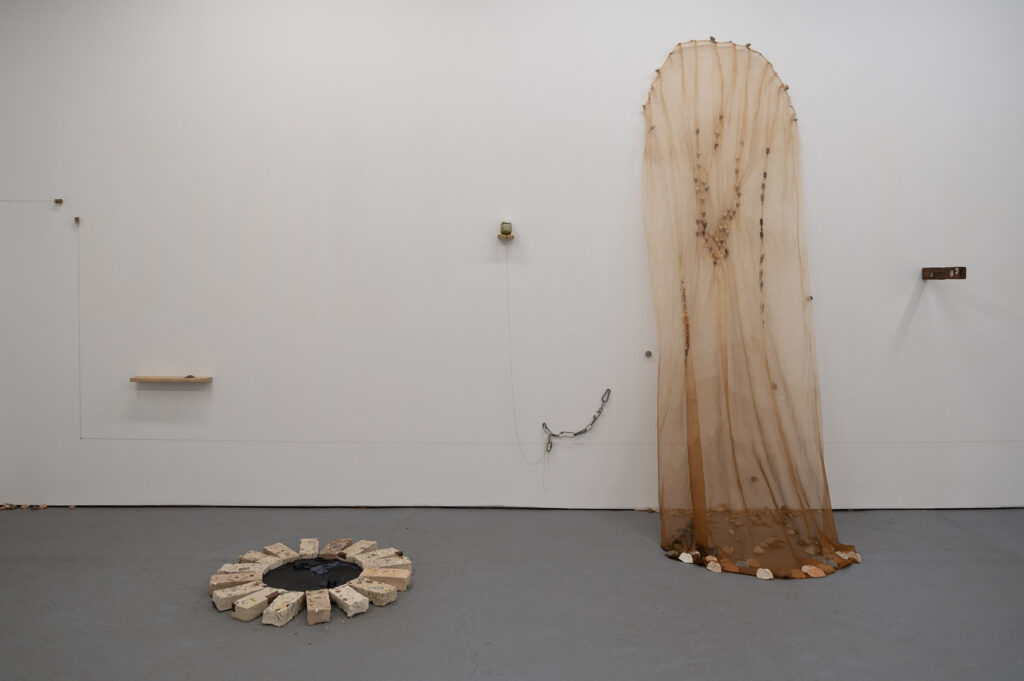
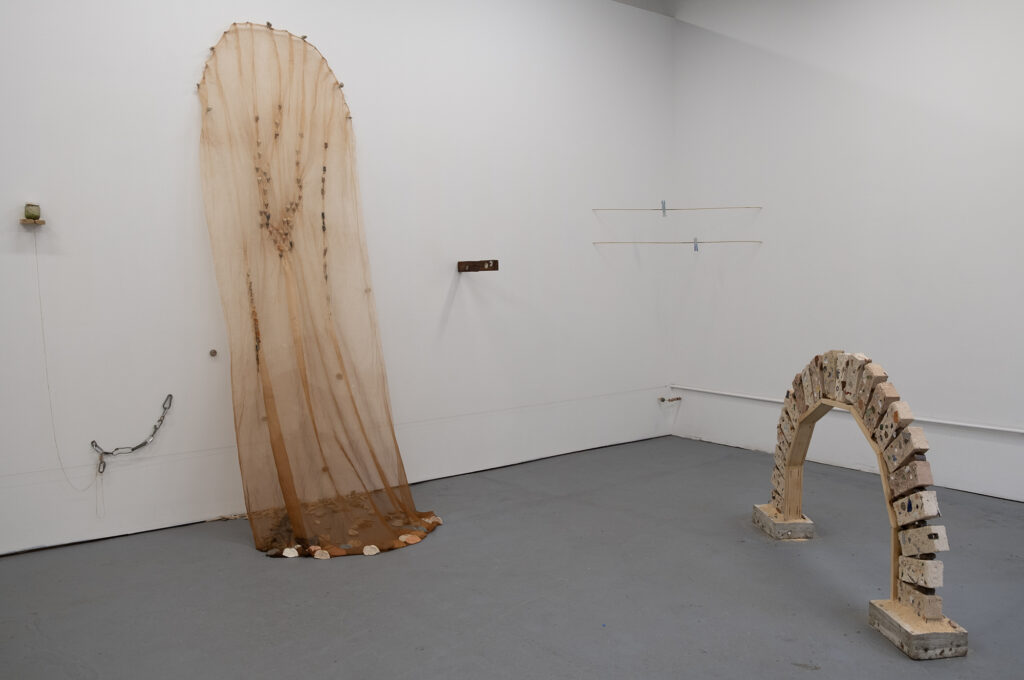
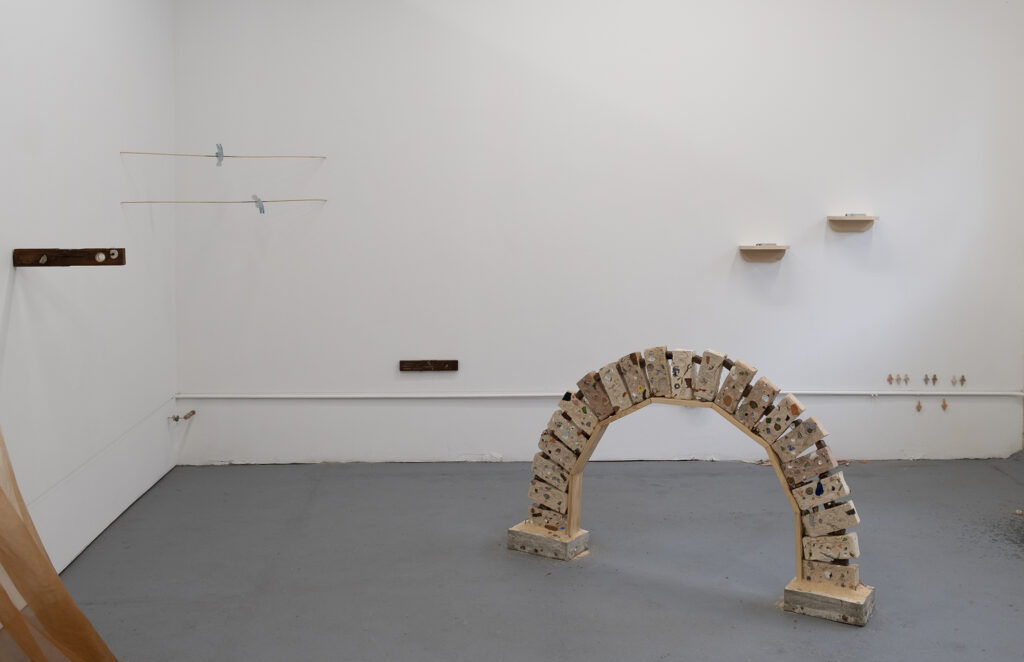
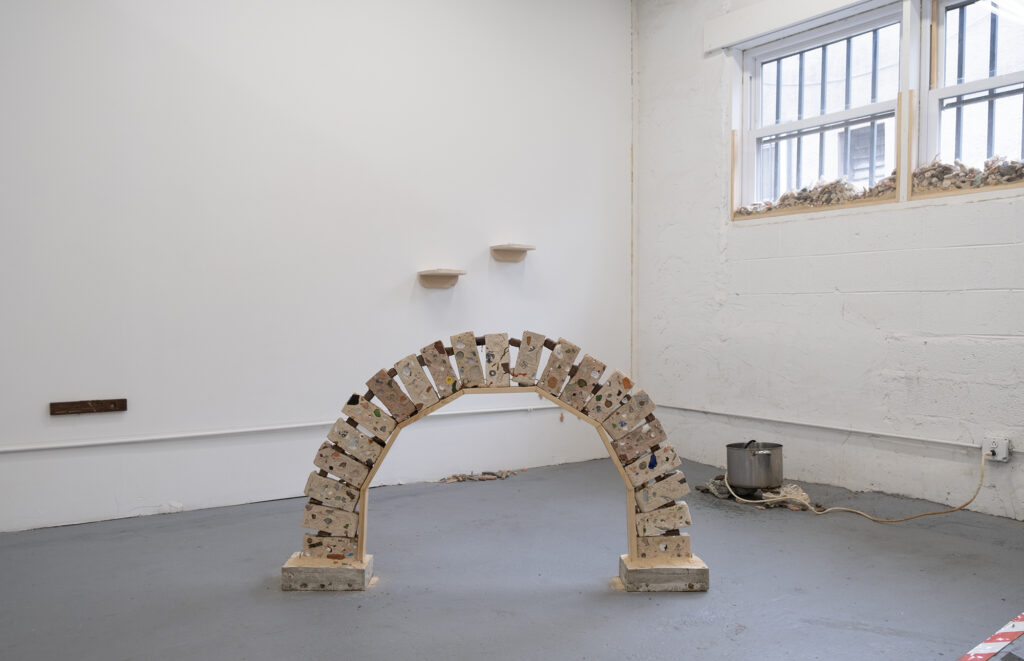
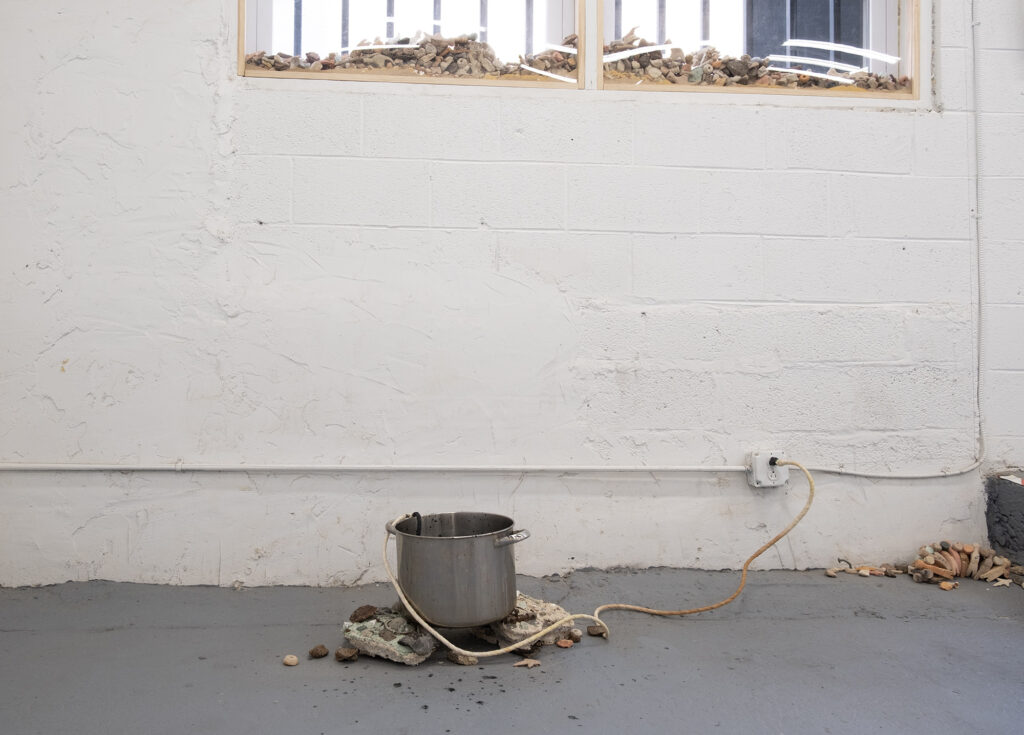
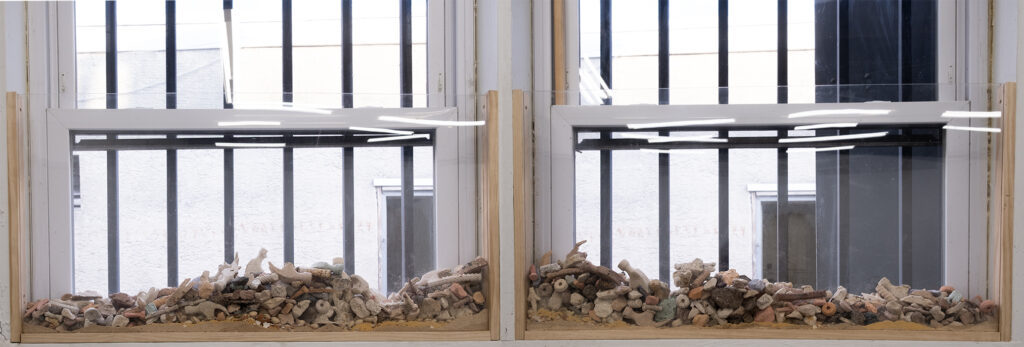
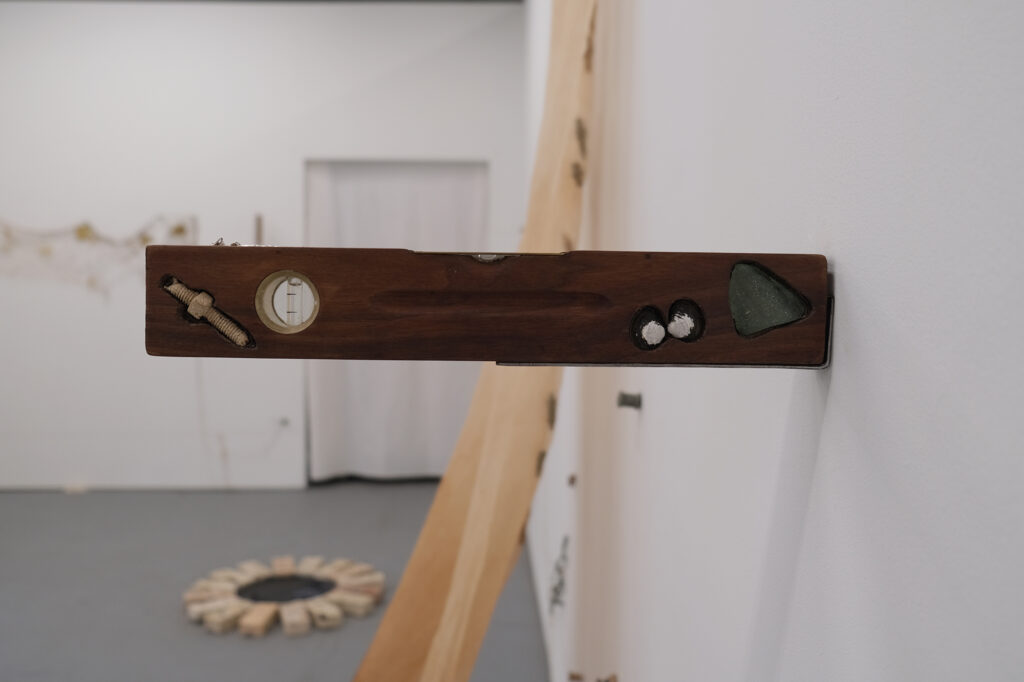
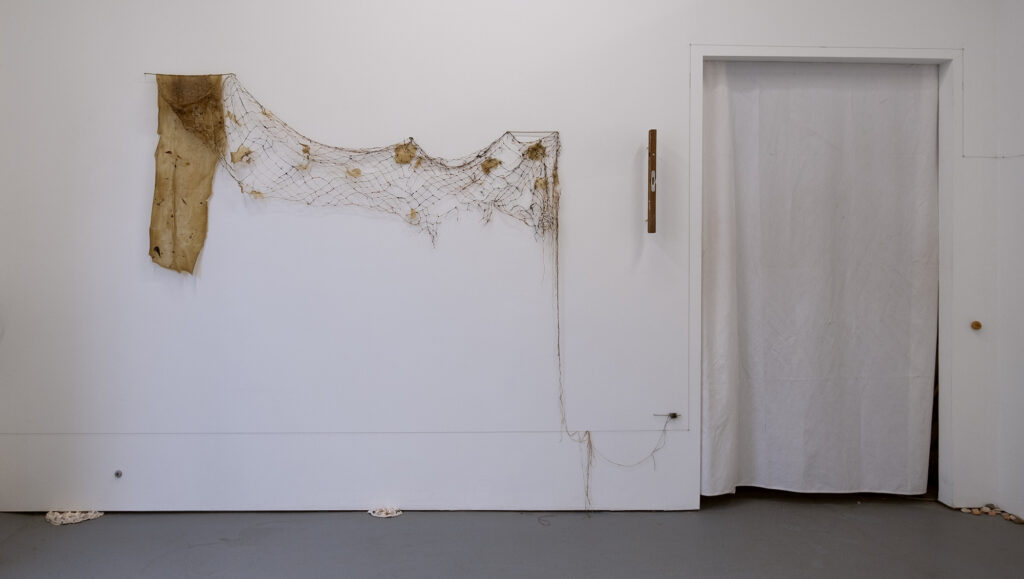
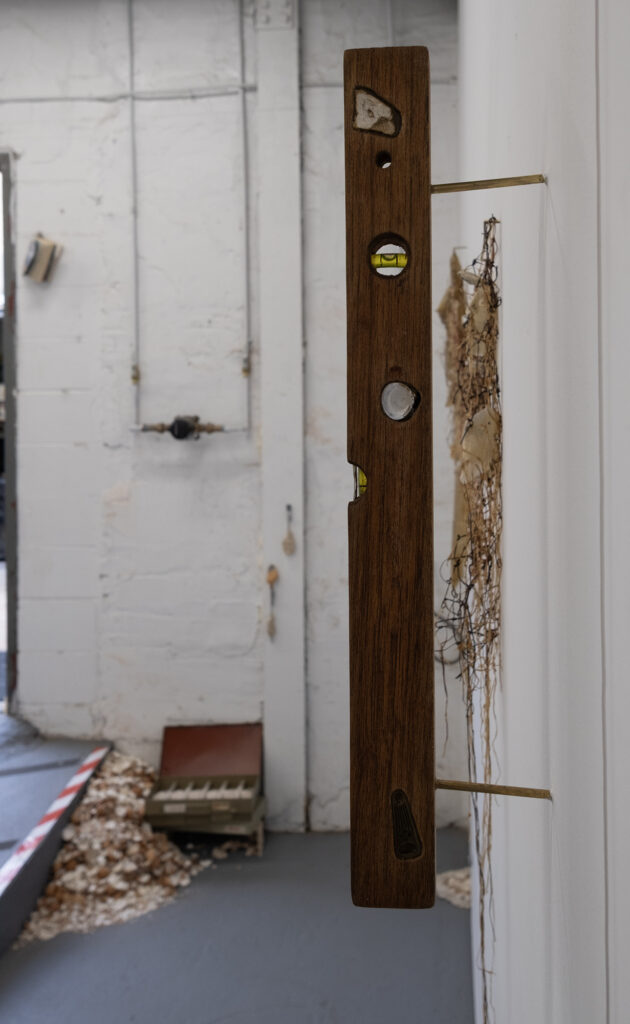
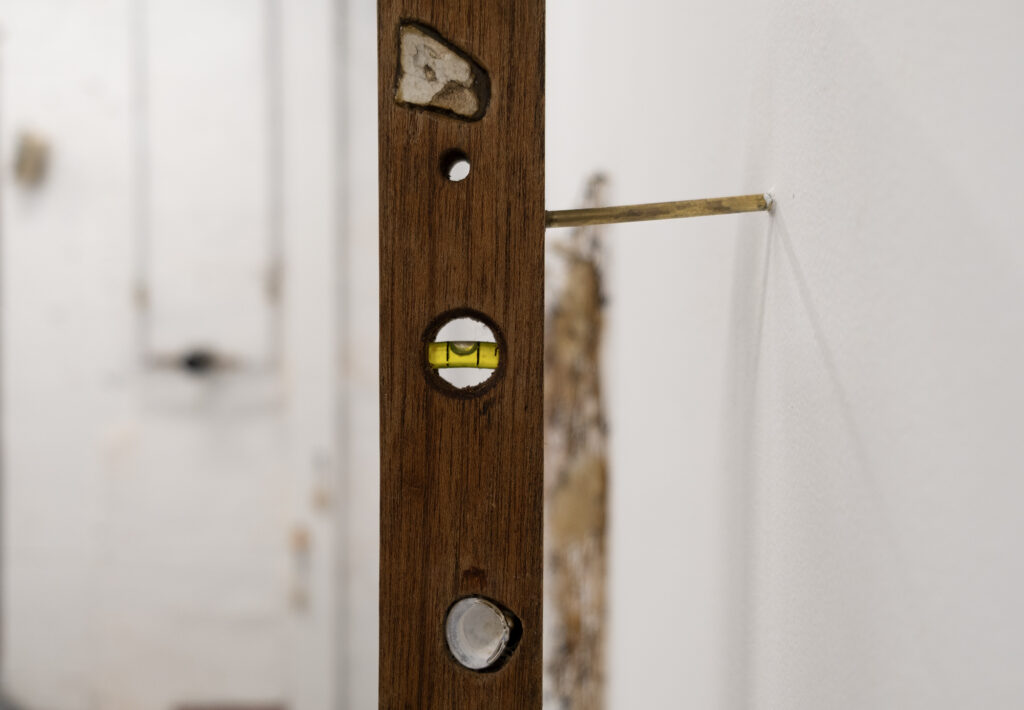
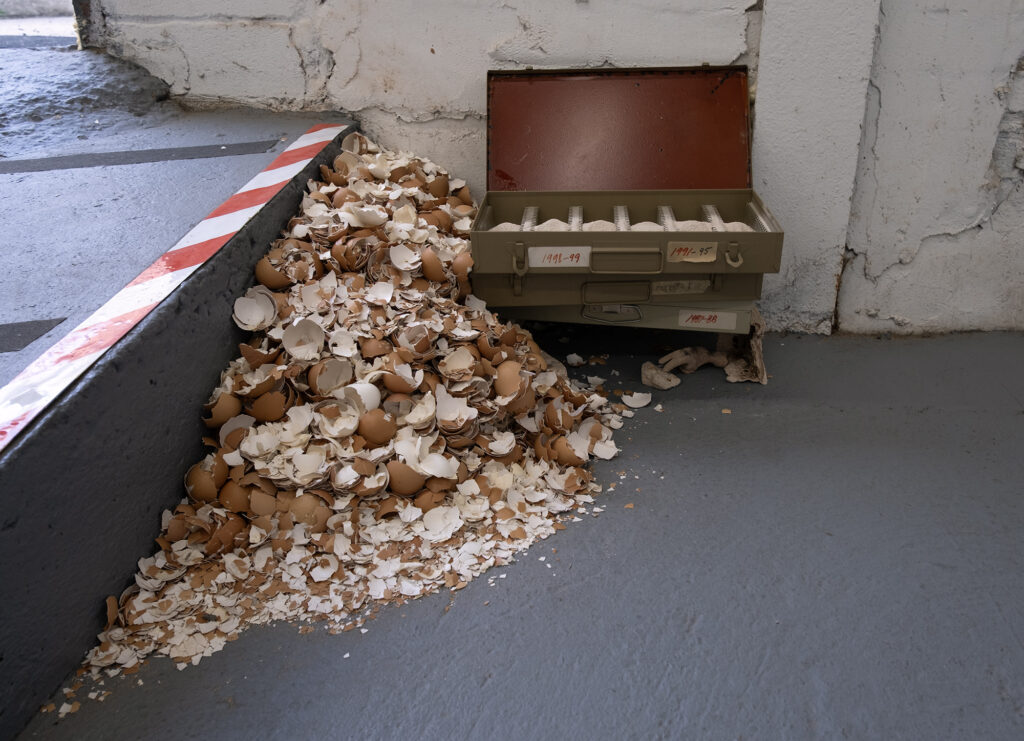
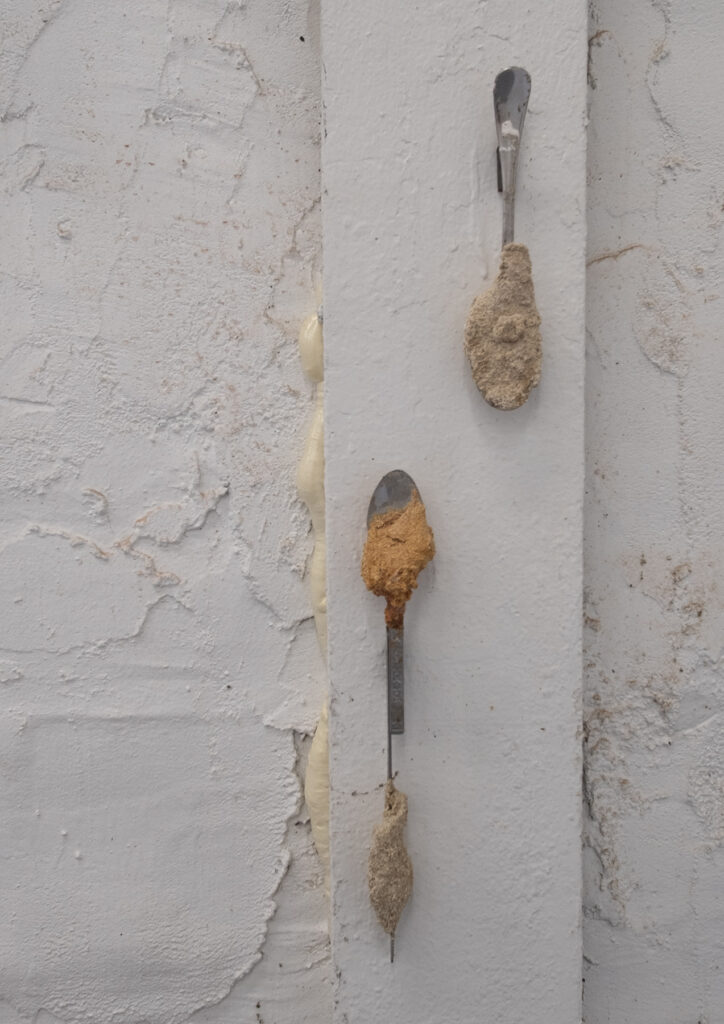
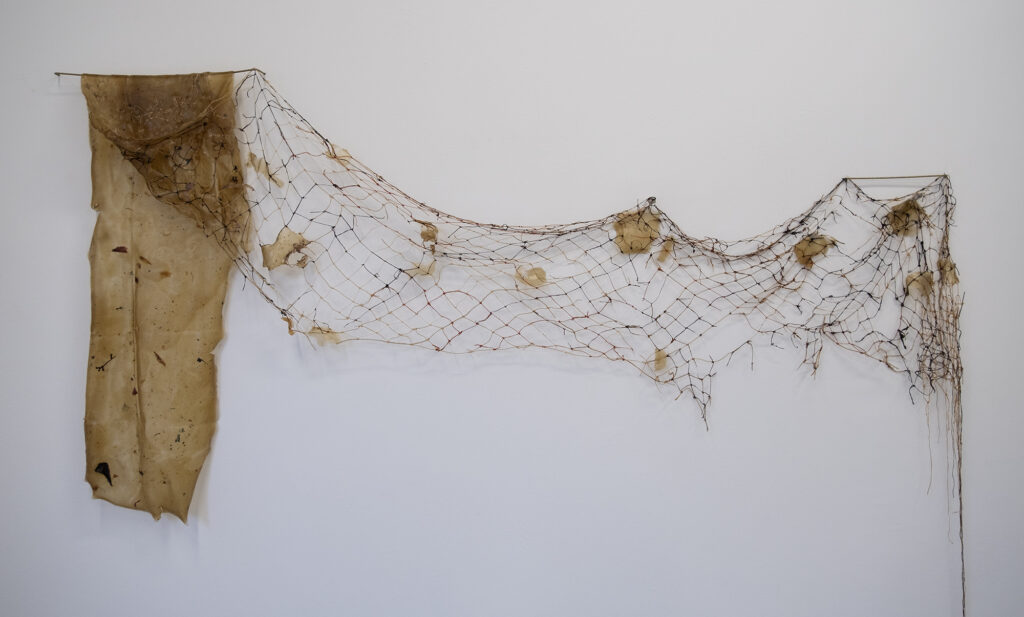
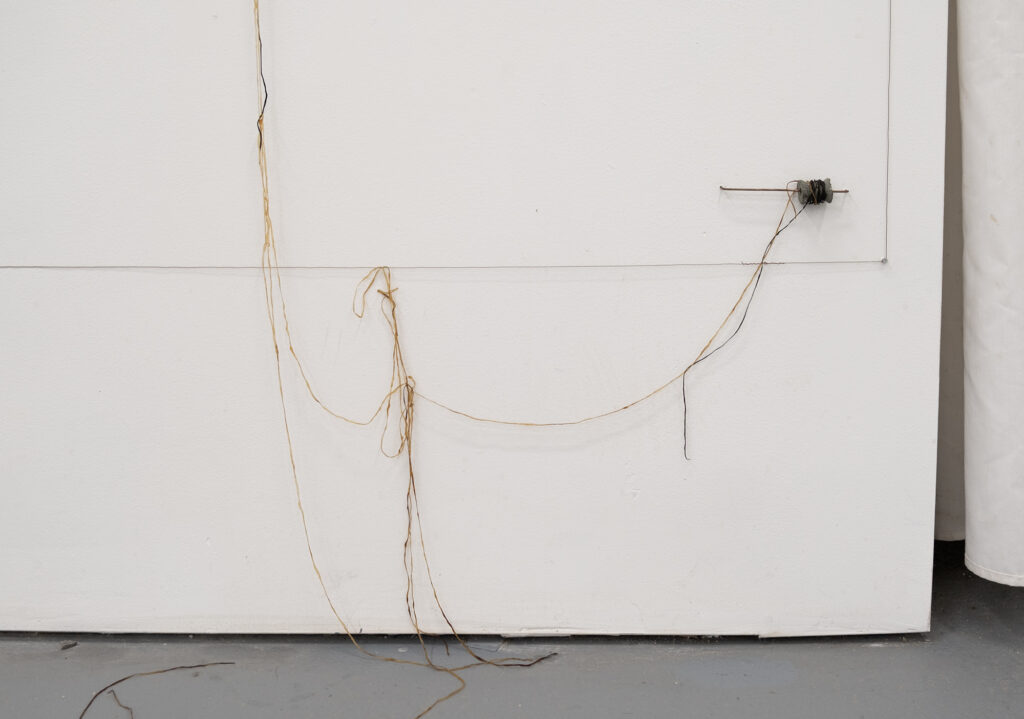
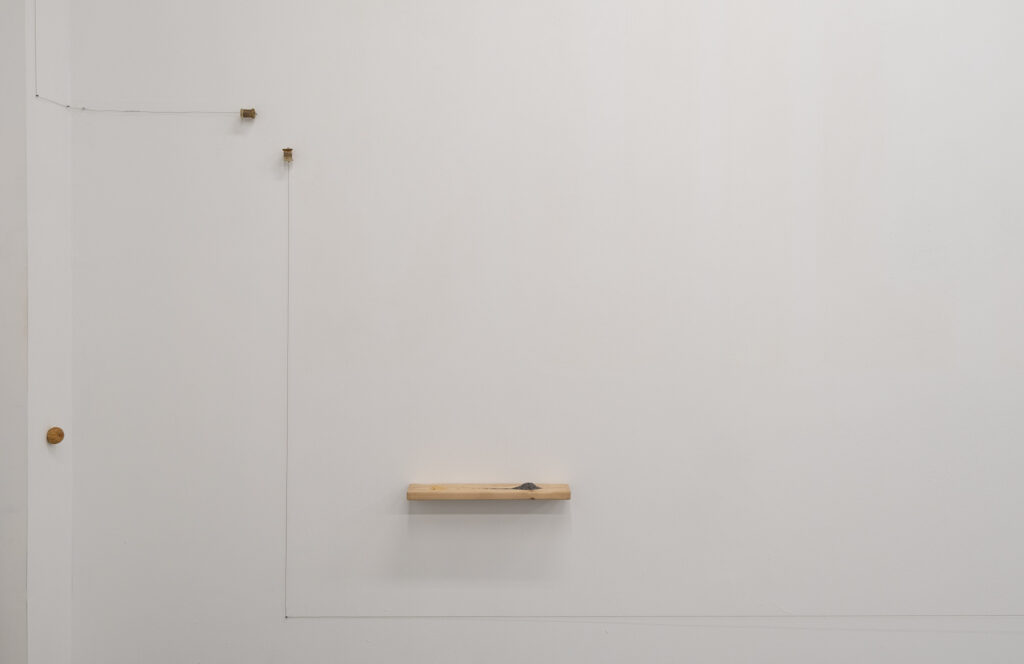
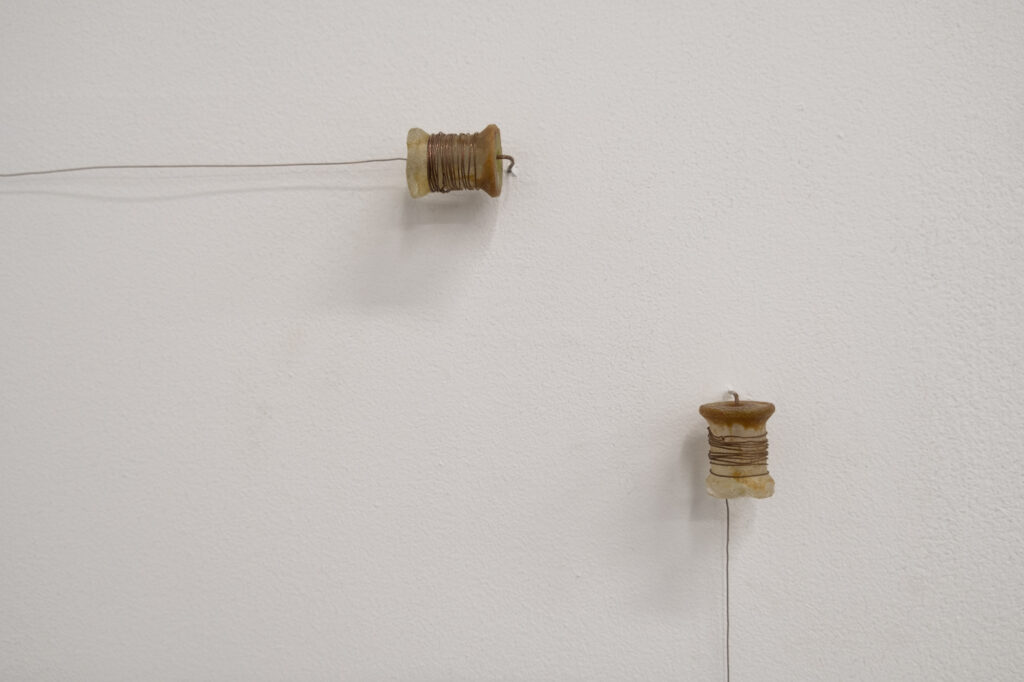
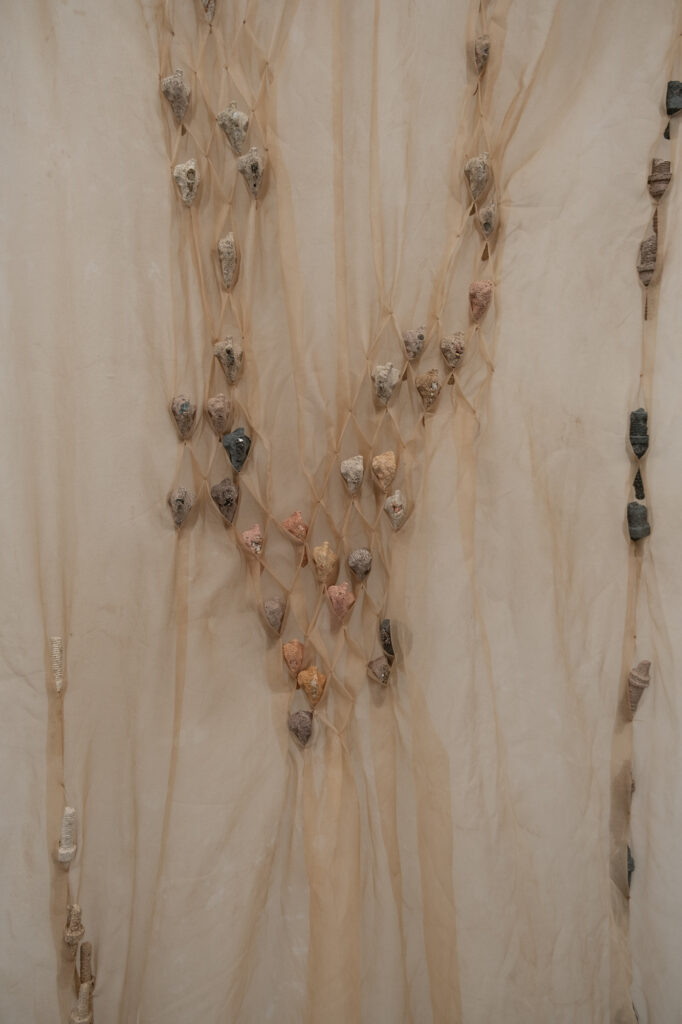
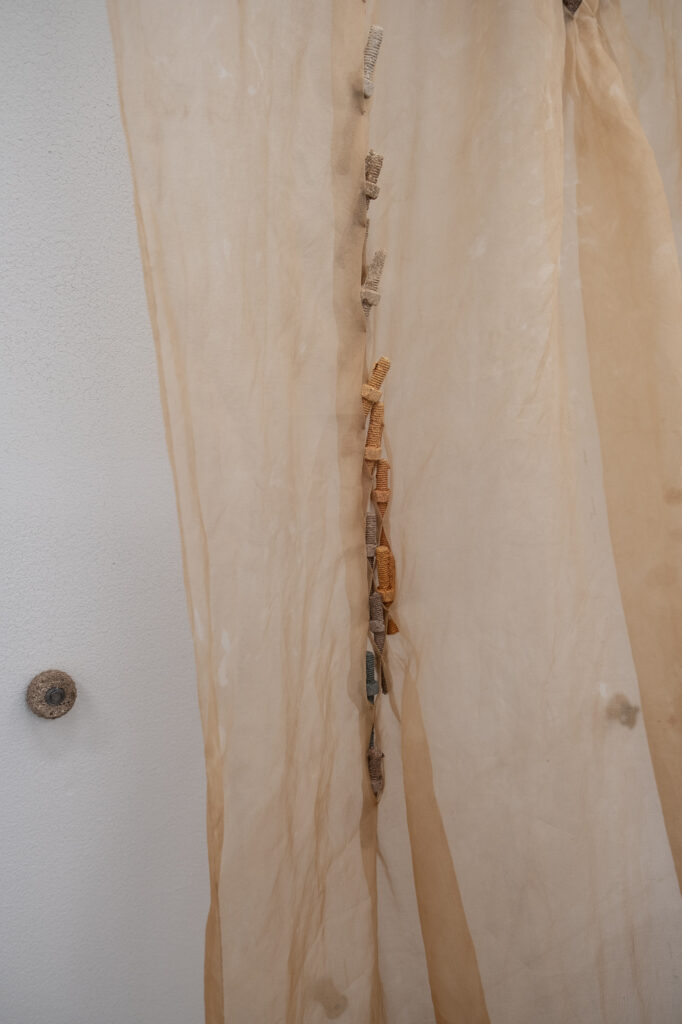
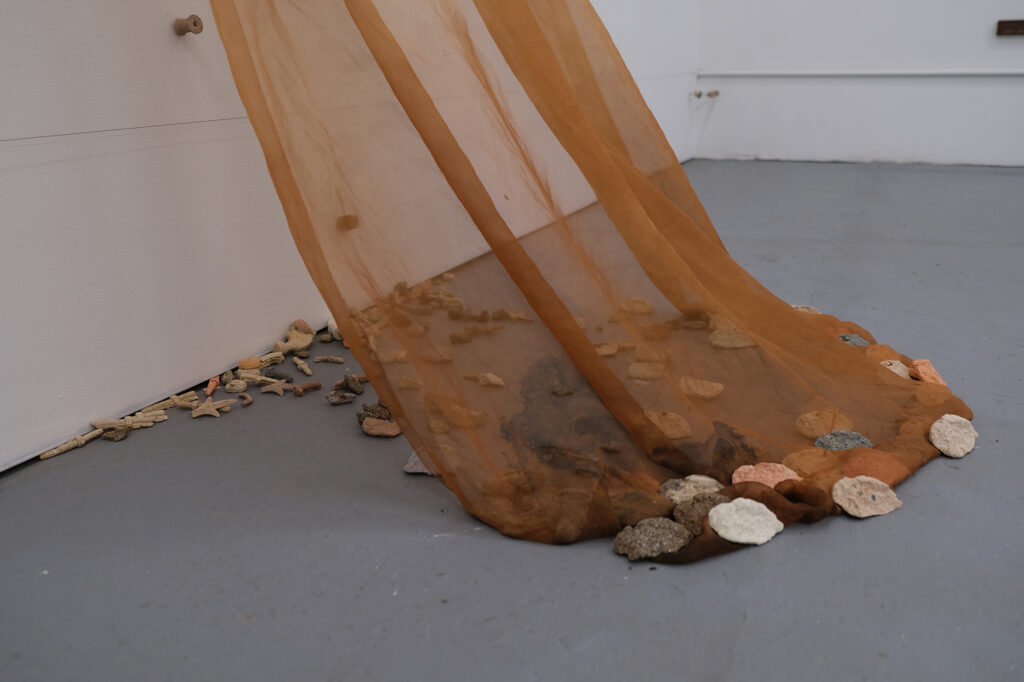
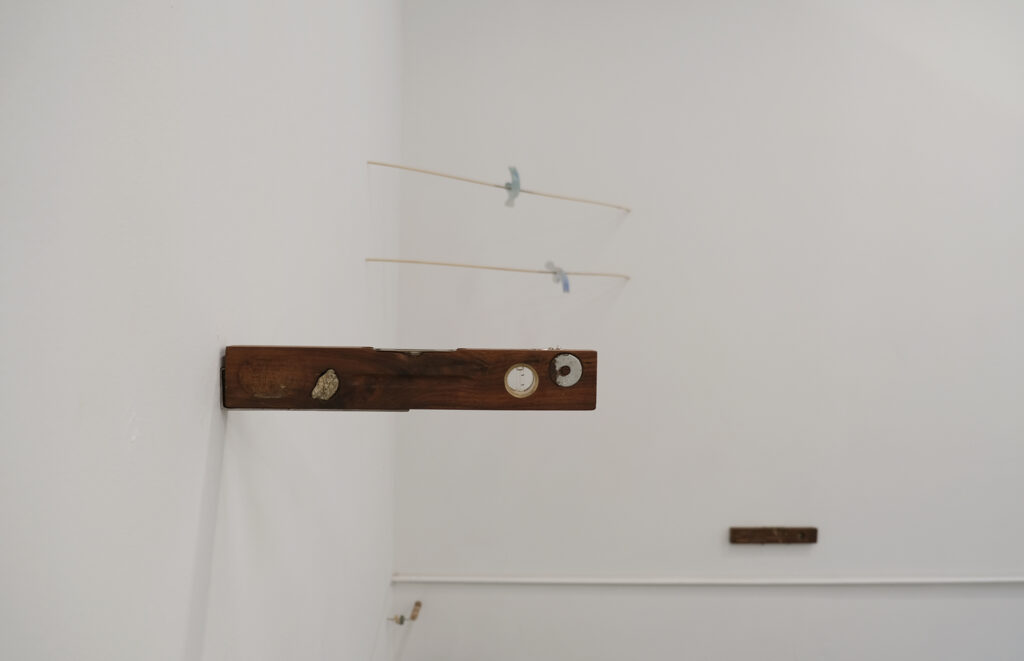
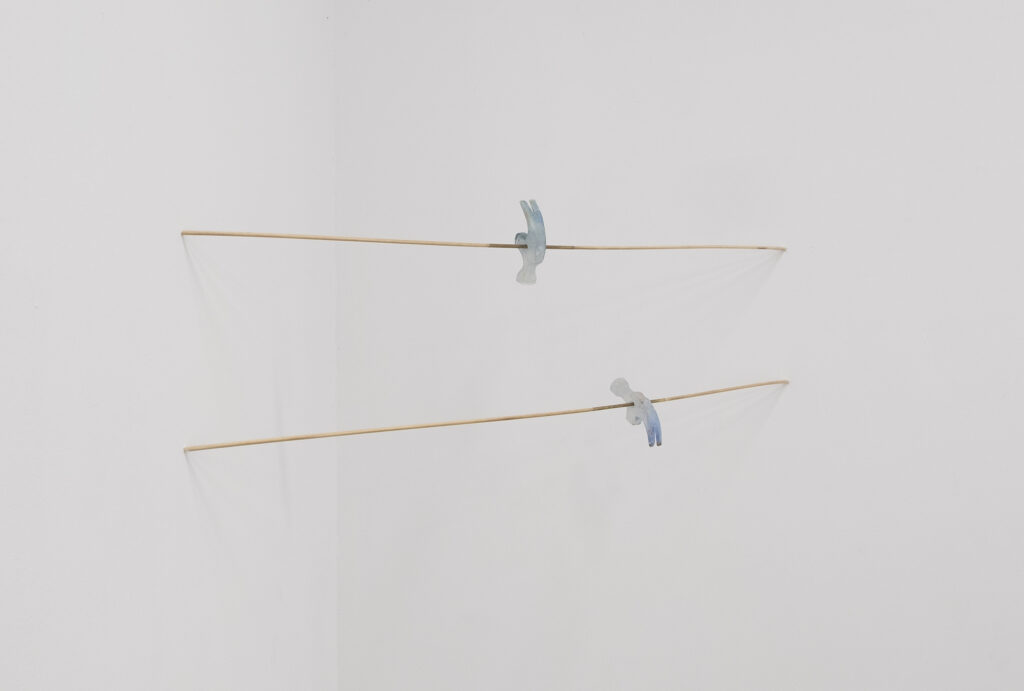
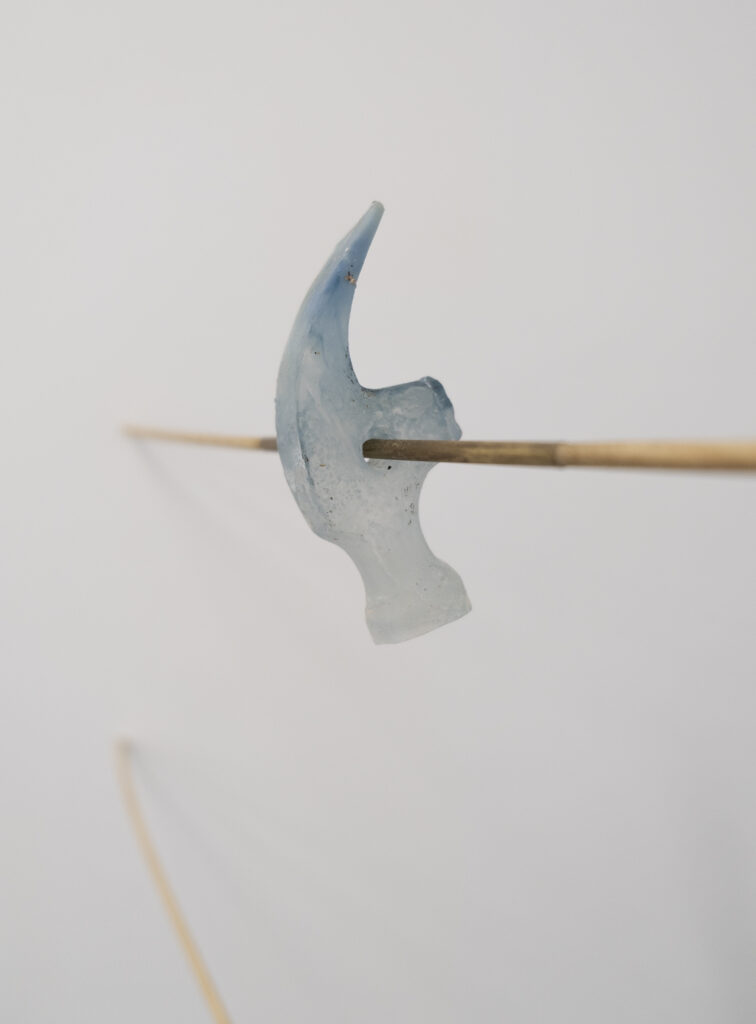
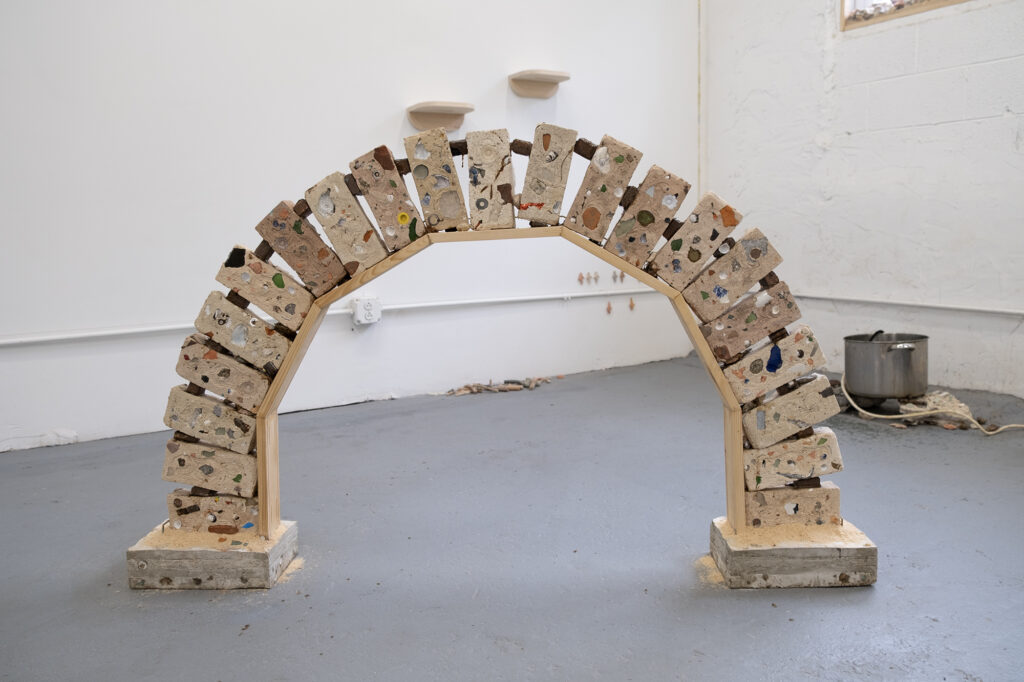
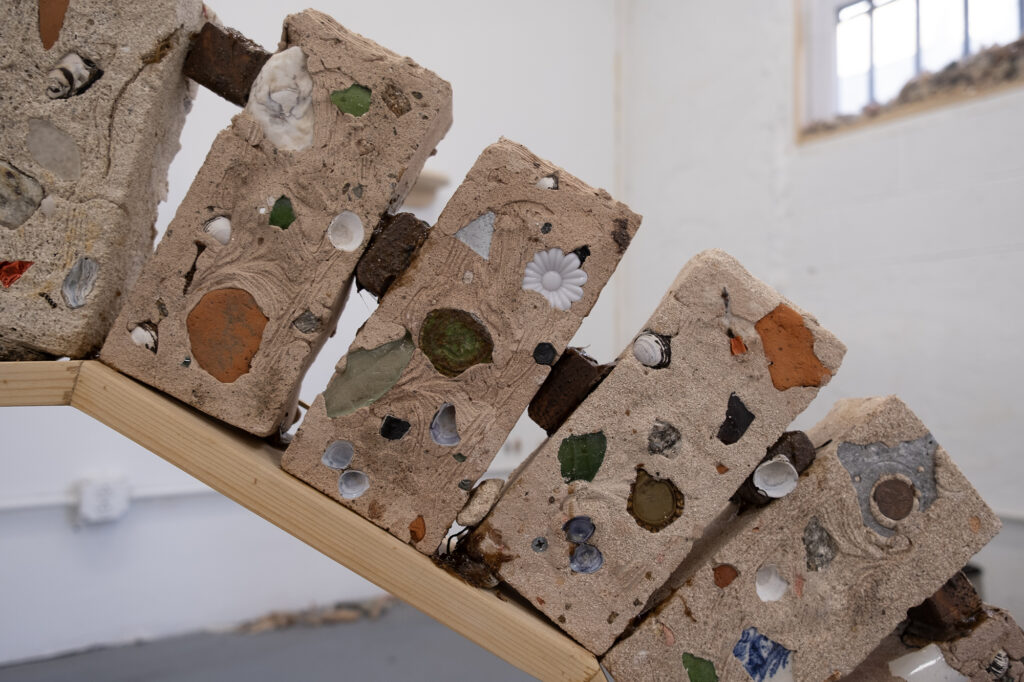
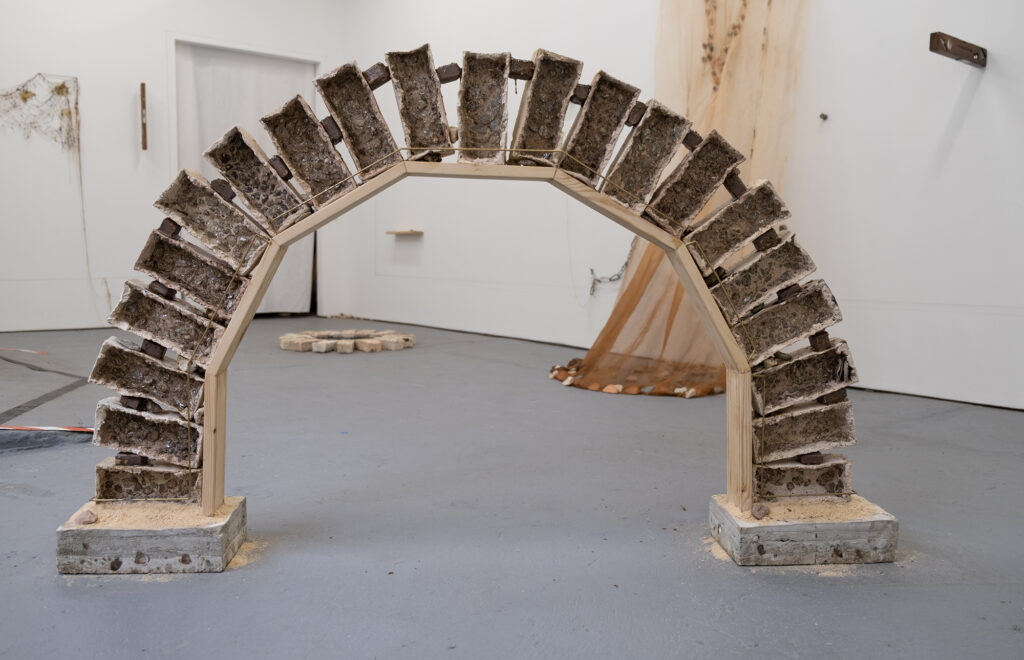
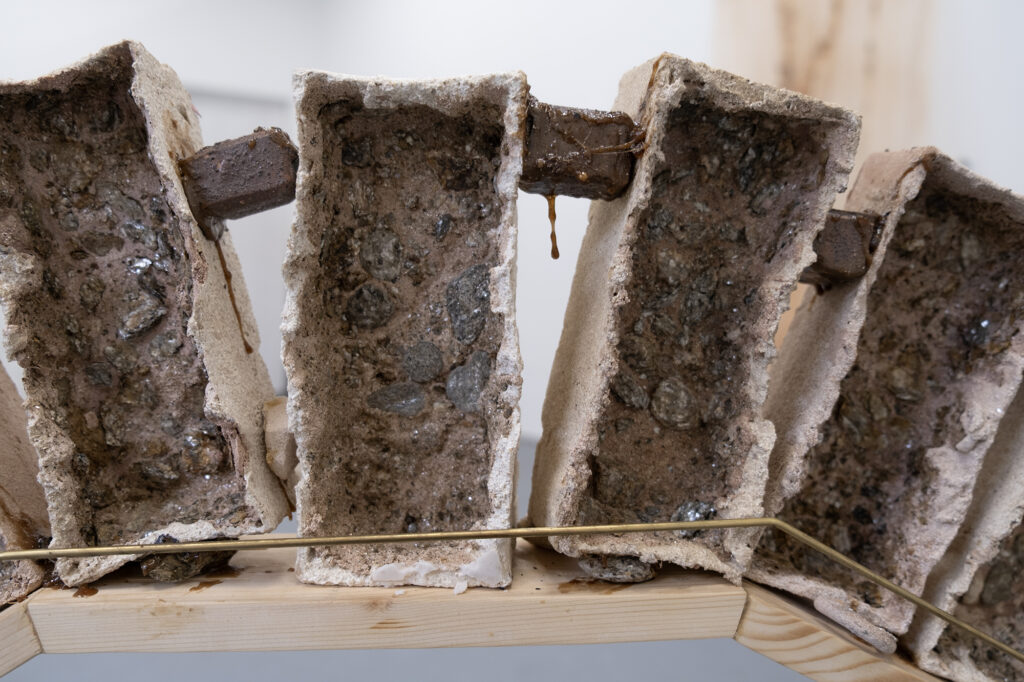
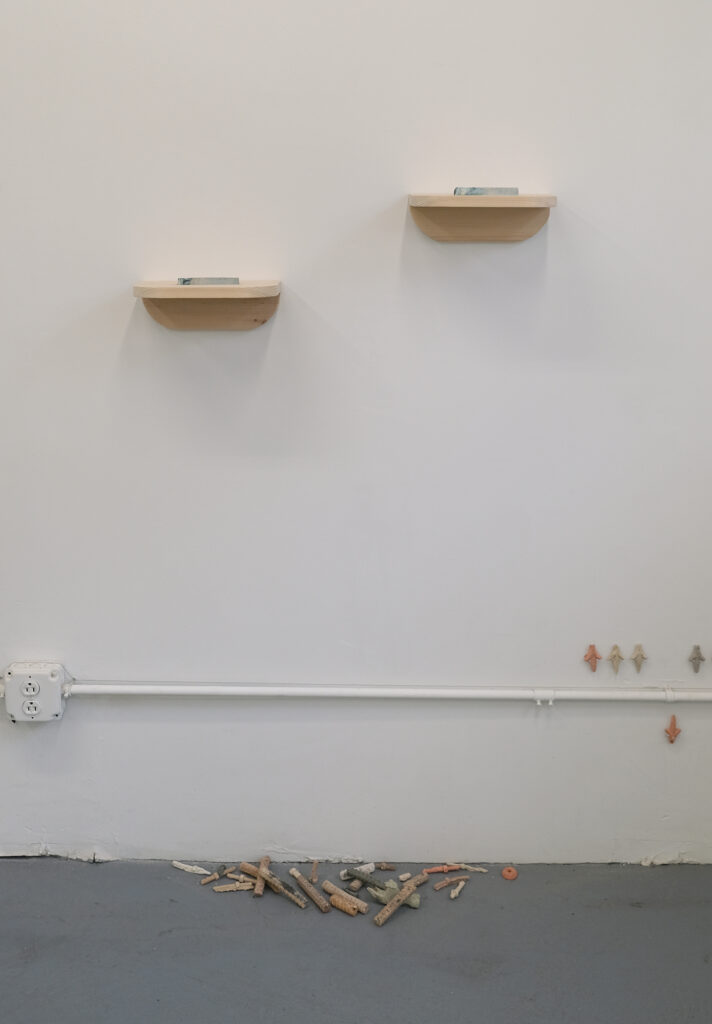
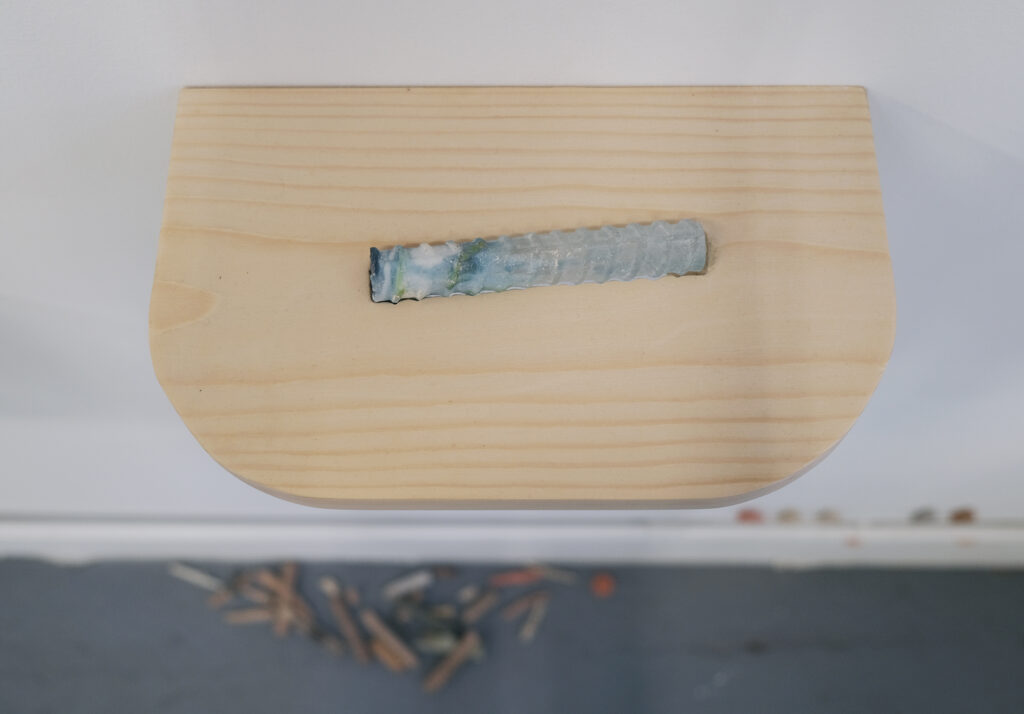
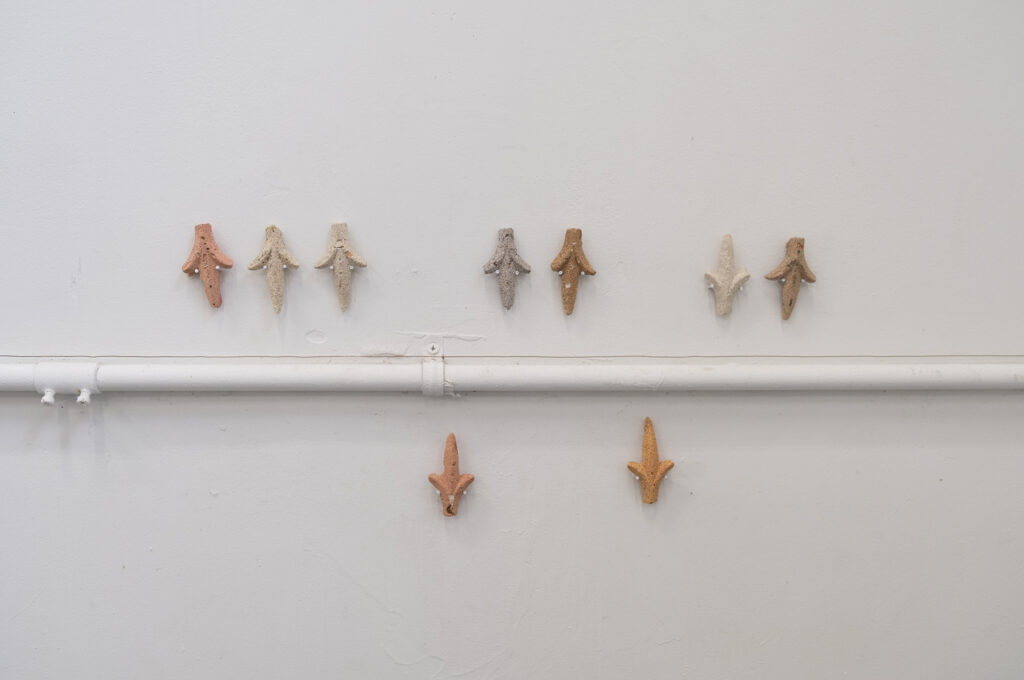
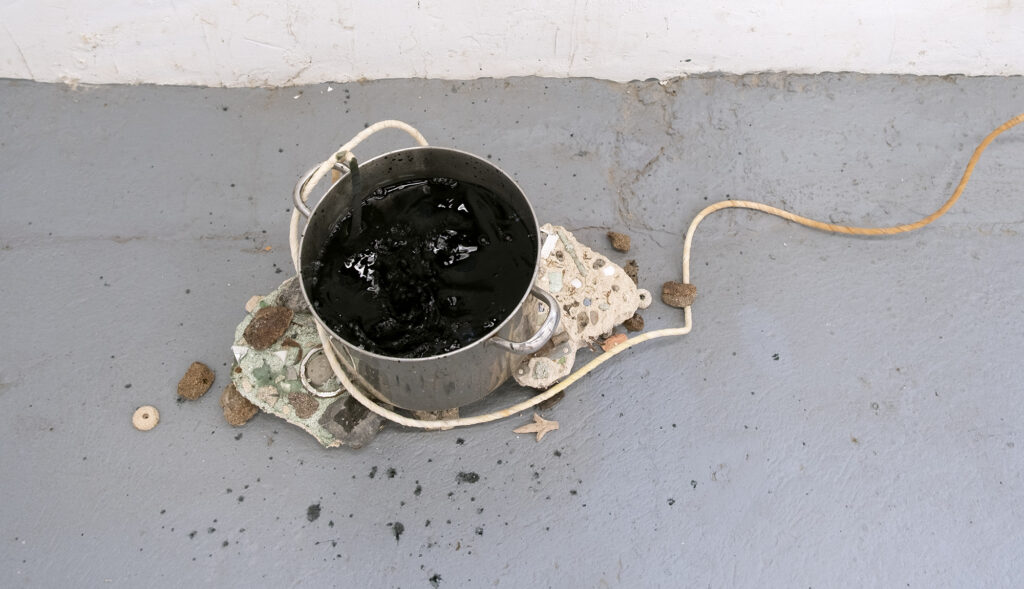
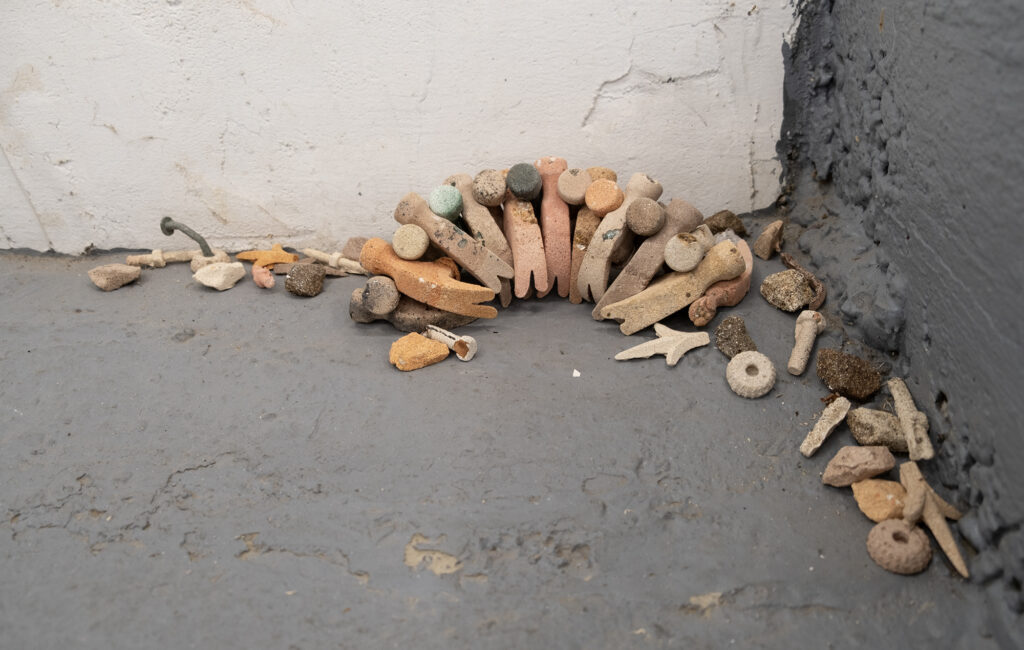
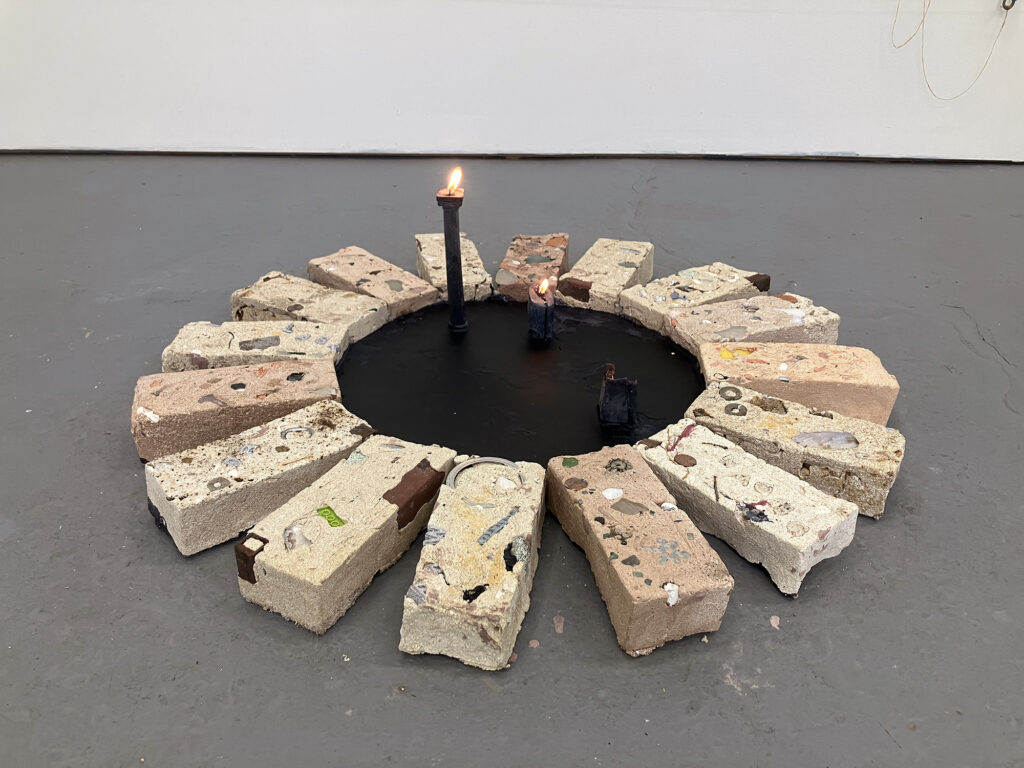
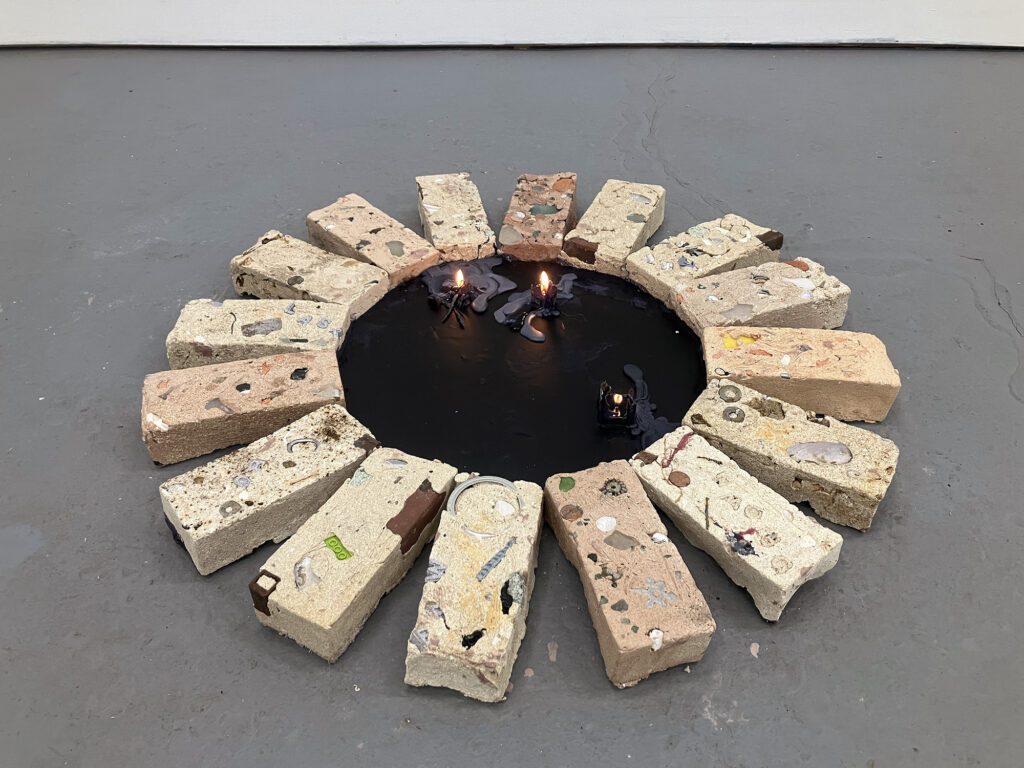
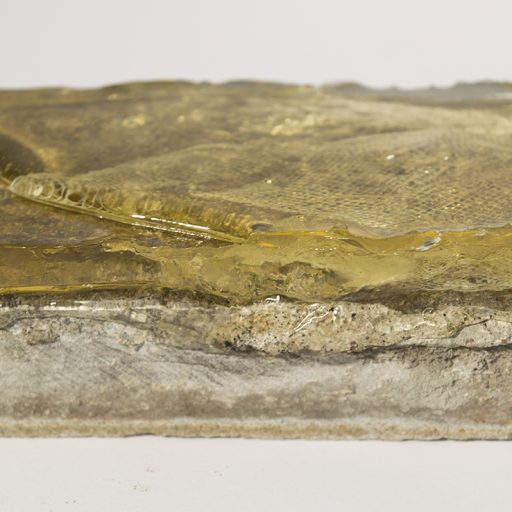
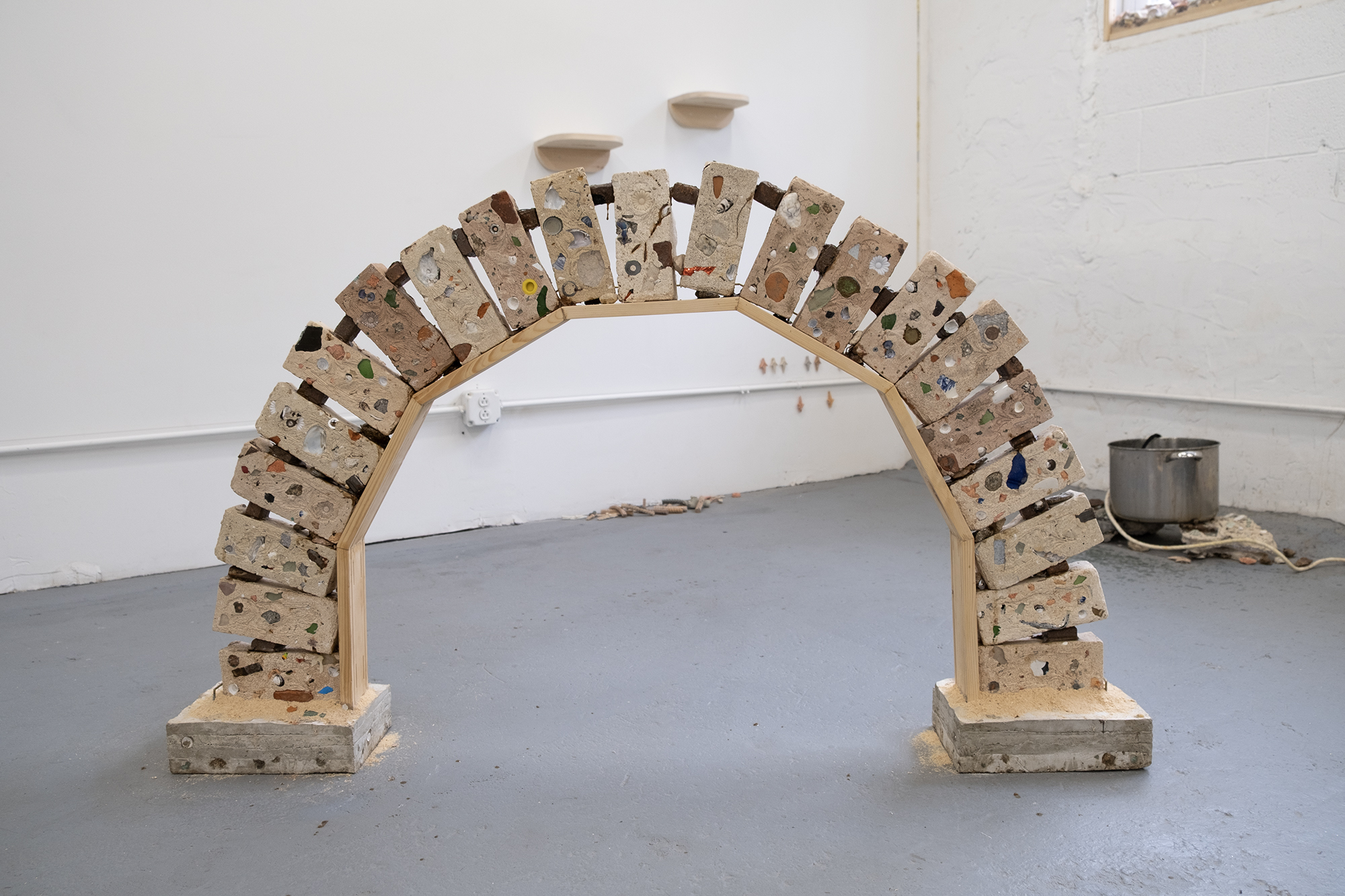
Central to McKinnon’s practice involves a questioning of tools and their intentions for the organic world. McKinnon’s process involves experimentation with new and invented casting methods for organic materials, where familiar objects such as hand tools and architectural fragments are cast in crushed eggshell, algae, sugar, coffee grounds, and gelatin – transforming them into objects resembling cement, stone, and bone. Copper wire traces the walls in delicate lines as though a crude circuit is being assembled, suggesting a machine interface between fossils and architecture. Objects repeat, such as the head of a broken hammer, becoming an emblem of labor, of tools that assemble and demolish. Bricks cast with building debris become signifiers of our fragile built environment. Lying static in a litter of other castings, one can imagine encountering these fragments excavated from an archeological site or scattered amongst shells on a riverbank, left to become sedimentary layers of earth.
McKinnon works with these materials like an assistant tasked with accelerating their petrification, transforming the familiar into fossils, and finding the poetics of longing and lamentation in our human relationship to the sedimentation of things. These fragments—static and scattered—evoke the sensation of archaeological finds unearthed from a distant past. Each work feels connected to the others with spatial threads, prompting us to reflect on what happens when the organic becomes soil, ocean, or rock, and when the act of making enters into the realm of slow fossilization.