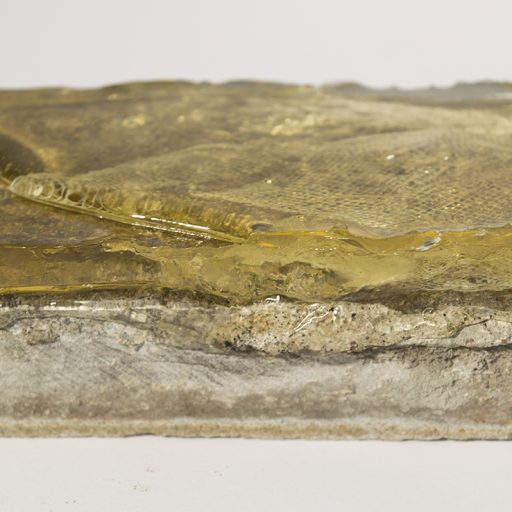
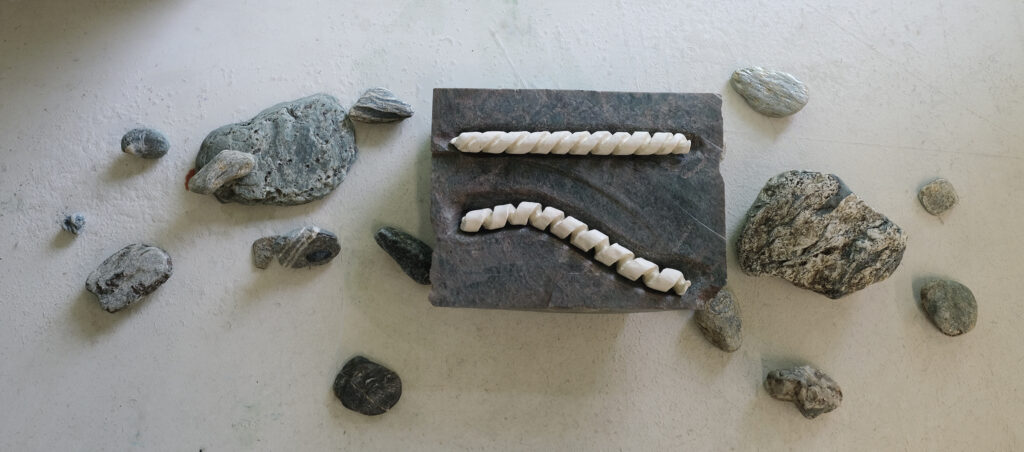
Worm charming is the folk practice of calling worms from the ground through use of vibrations, drones, created through friction of various surface materials. In this series, the tunneling movement of worms as they cycle through soil is compared to the act of drilling. Geologists have two methods for obtaining samples of submerged earth layers – drilling and core samples. Drilling is faster, easier, and less costly, but provides a fragmented and disrupted view of geologic time – the drillbit destroys chronology in the process of creating openings into the earth, bringing to the surface a churned mixture of gravel. What is brought forth to the surface by the vibrations of the tunneling drill is transformed, half-digested – the crystalline formations of the past broken down and shaped anew by the movements of labor.
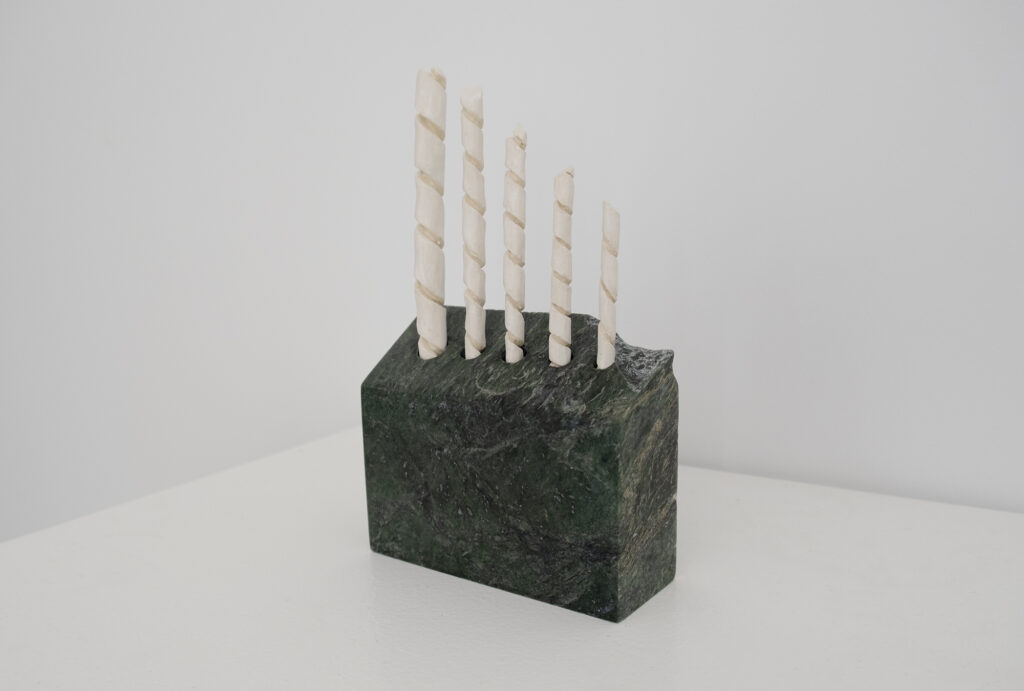
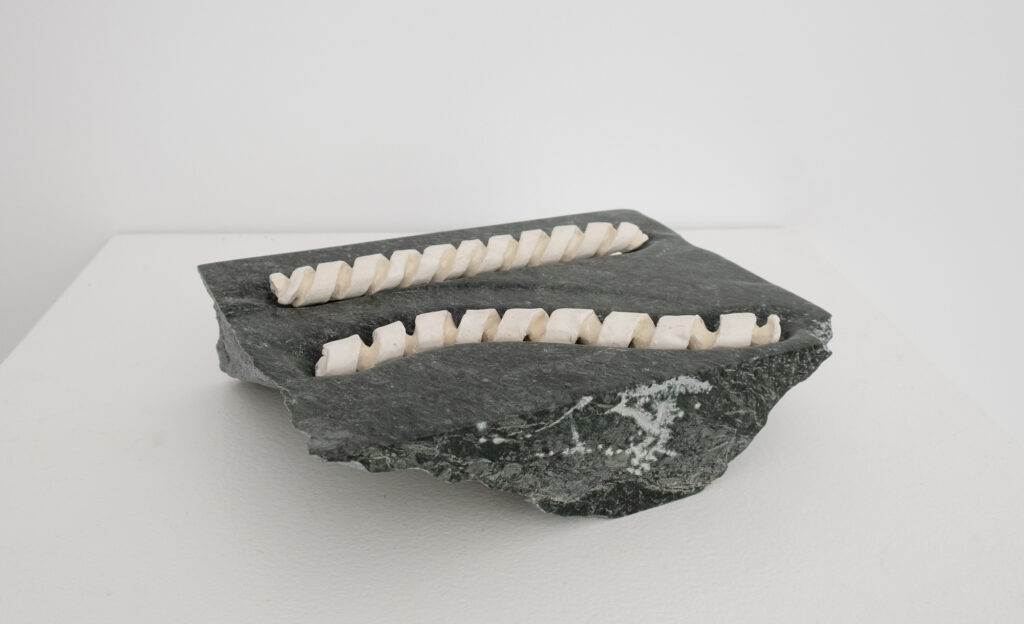
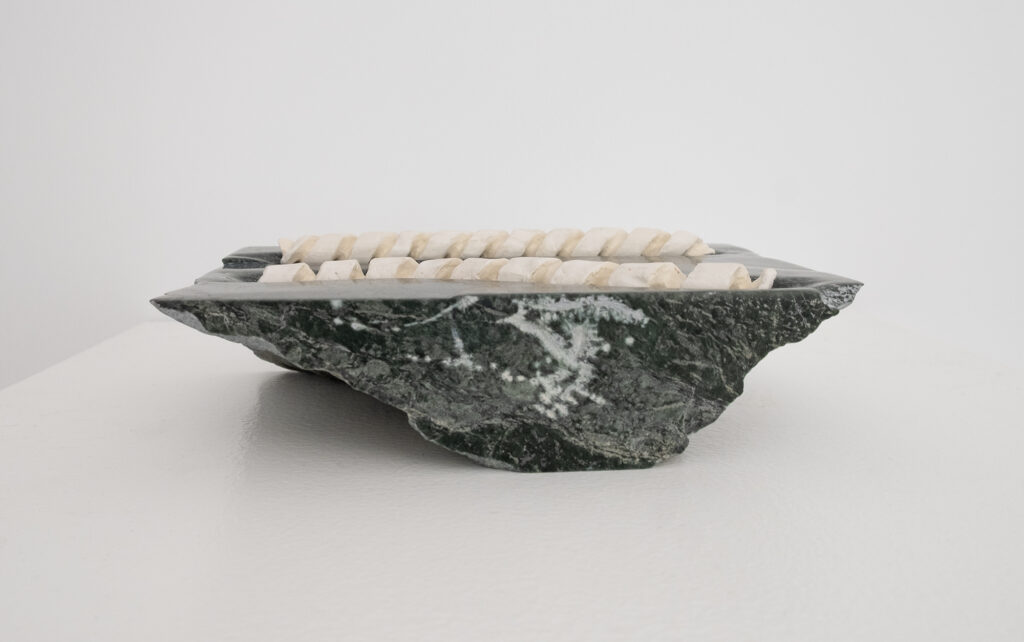
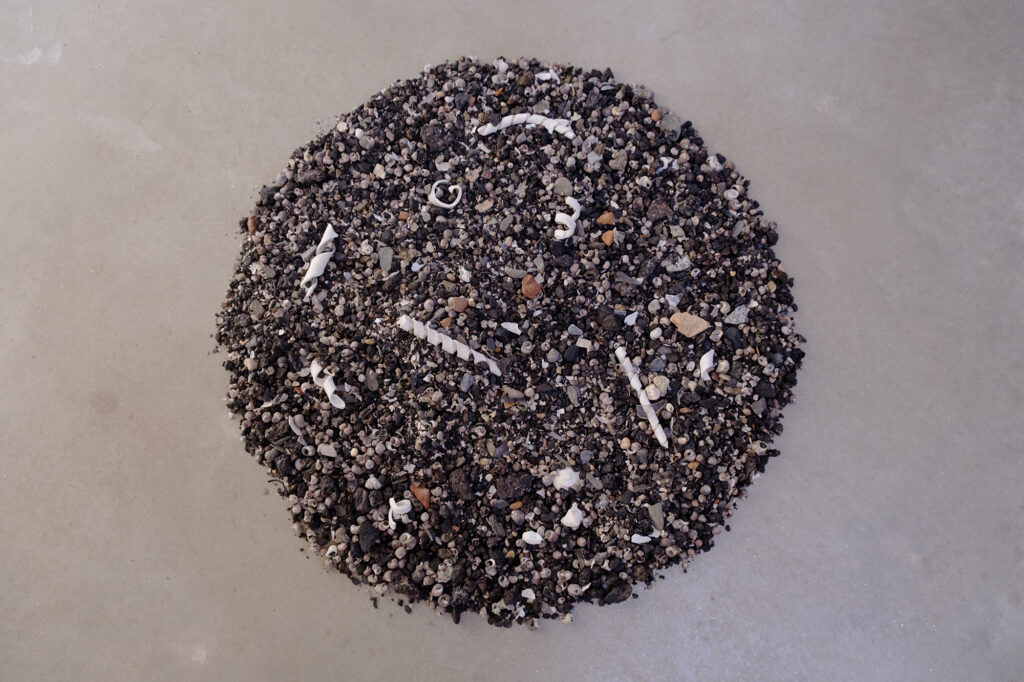
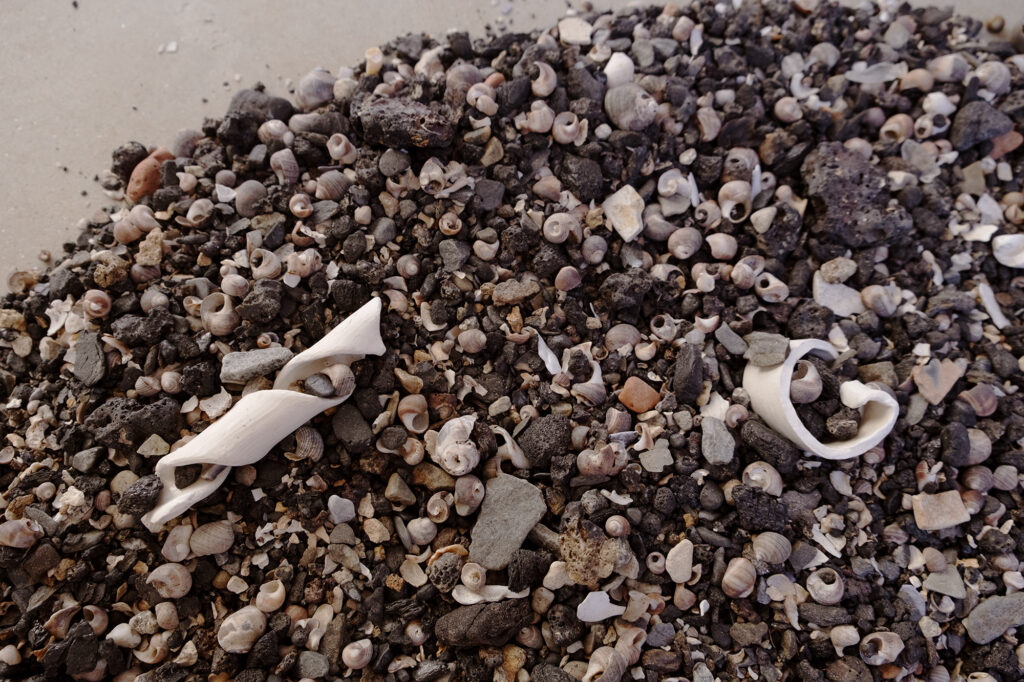
Bitkit, ceramic and Vermont greenstone, 5 x 8 x 3″ (2026)
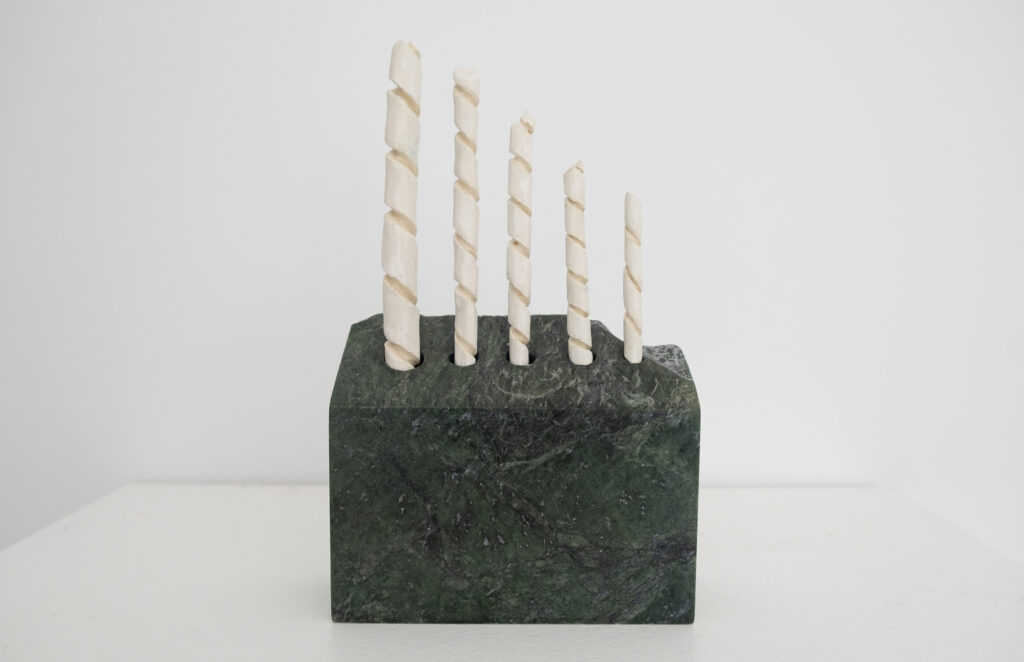
Wormcharming, ceramic and Vermont greenstone, 10 x 8 x 4″ (2026)
Core Samples, ceramic and beach gravel (industrial slag, snail shells, bricks, seaglass), 18″ diameter (2026)